
???? Join 60,000+ learners who trust YHills to upskill — one course at a time.


Exploring Live Examples of Embedded Systems We Use in Daily Life
Table of Contents
Embedded systems are tiny computers built into everyday things like cars, phones, and even your fridge. They quietly work in the background, making these devices smart and capable of doing all sorts of tasks without us even noticing.
Embedded systems play a big role in our daily routines, making things easier and more efficient. For example, they help control traffic lights, regulate temperature in our homes, and even keep our hearts beating steadily with medical devices.
- According to MarketsandMarkets, a reputable B2B research firm, the embedded systems market is expected to experience significant growth, reaching a value of $116.2 billion by 2025.
- According to Total Phase, Embedded systems are used in a variety of everyday applications, from safety systems to providing goods and services.
In this article, we’ll explore the live examples of embedded systems, like those in smartphones and smart refrigerators, quietly make our daily lives better.
“Embedded systems are the invisible workhorses that make our modern world possible.”
Jack Ganssle
Examples of Embedded Systems
Automatic teller machines (ATMs)
ATMs are embedded systems found in banks. They help with banking tasks like cash withdrawals and balance checks. Inside, they have hardware (like card readers and cash dispensers), software (to run the ATM interface), and connections to the bank’s system. These connections enable quick transactions and efficient bank operations.

Traffic lights
Traffic lights are another example of embedded systems. These lights control the flow of traffic at intersections. Inside, they have hardware components such as lights and sensors, software programs to manage timing and sequences, and connections to a central control system. This allows them to regulate traffic smoothly, ensuring safety and efficiency on the roads.

Smartphones
Smartphones are a prime example of embedded systems, often powered by a single system-on-a-chip (SoC). These pocket-sized marvels integrate multiple components onto a single chip, including processors, memory, and various sensors.
They also run complex software, including operating systems and applications, seamlessly merging hardware and software functionalities. Smartphones showcase the remarkable capabilities of embedded systems in our daily lives, offering a wide range of features such as calling, texting, internet browsing, navigation, and much more.

Elevators
Elevators are essential examples of embedded systems commonly found in buildings. These systems consist of various components, including motors, sensors, and control panels.
Inside, they often utilize sophisticated control algorithms to manage operations such as opening and closing doors, moving between floors, and ensuring passenger safety. Elevators demonstrate the integration of hardware and software to provide efficient vertical transportation, making them crucial elements of modern urban infrastructure.

Automatic washing machines
Automatic washing machines are perhaps one of the most familiar examples of embedded systems that are commonly found in households. These machines automate the process of washing clothes, making laundry chores more convenient.
Inside, they include hardware components such as motors, pumps, sensors, and control panels. Embedded software manages various washing cycles, water levels, temperatures, and spin speeds based on user settings.
Automatic washing machines often feature connectivity options for remote monitoring and control, enhancing user convenience and flexibility in their laundry routines.

Home thermostats
A home thermostat is like a smart tool that helps control the temperature in a house. It’s made up of computer parts and software, all packed into one system.
Here’s how it works: The thermostat keeps an eye on the temperature inside your home and adjusts the heating or cooling system to keep it just right. It uses a tiny computer called a microcontroller, along with sensors and other parts, to figure out what to do.
Nowadays, many thermostats can connect to your home’s Wi-Fi. This means you can control them from your phone or computer using an app or website.
Automatic gates
An automatic gate is like a smart system that controls the opening and closing of a gate, usually at the entrance of a driveway. It uses a small computer called a microcontroller, along with sensors and other parts, to figure out when to open and close the gate.
Some automatic gates can even do things like close on their own, detect obstacles, or open if the power goes out. They can also work with security systems like cameras and alarms to keep things safe.

Automatic sprinkler systems
An automatic sprinkler system is like a smart watering system for lawns and gardens. It uses a network of pipes and valves underground, connected to a main control unit.
Inside this system, there’s a special computer called an embedded system. It includes a tiny computer chip, sensors, and actuators.
One big advantage of using this embedded system is that it lets the sprinkler system water your lawn very precisely. For example, it can be set to water only when the soil is dry, or change the watering schedule based on the weather forecast.
These embedded systems can also connect to other systems, like home automation, so you can control your sprinklers from anywhere.
CNET
Automatic door locks
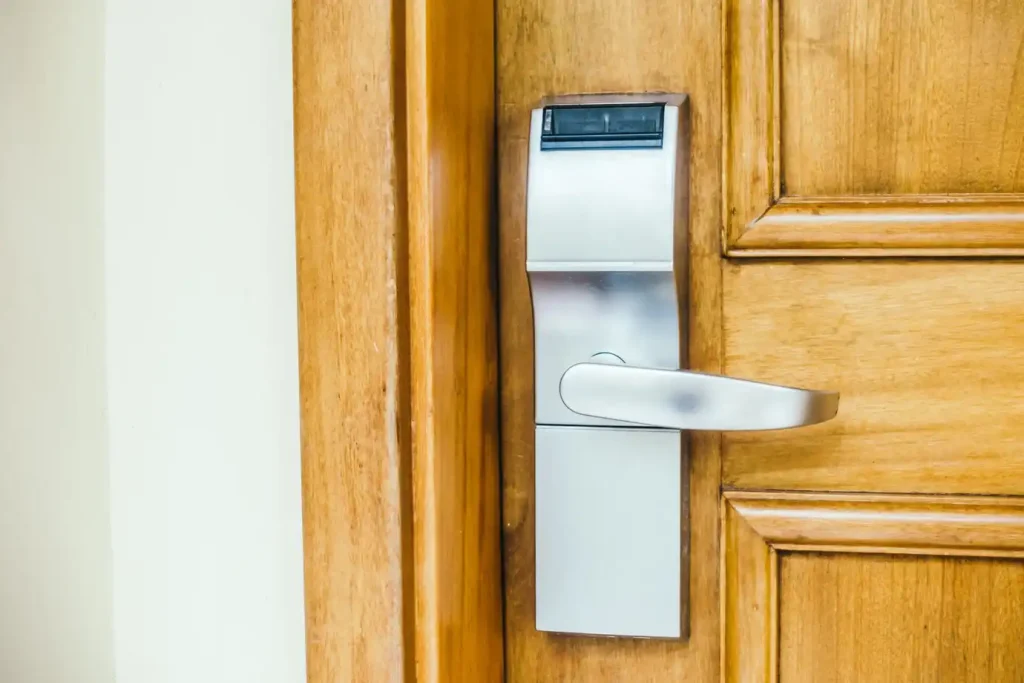
Automatic door locks are sophisticated embedded systems designed to regulate door access, ensuring only authorized individuals can enter a building or room. They use special sensors and computer parts to detect who’s allowed to enter. Once they recognize someone, they unlock the door for them.
You’ll often see these locks at homes and offices to keep them safe and control who goes inside. They’re a handy way to make sure only the people you trust can enter your space.
Automatic garage doors
An automatic garage door is a clever and handy embedded system that adds a touch of modern convenience to owning a garage. It’s like having a smart helper for your garage door!
Inside, there’s a tiny computer called a microcontroller that’s the brain of the system. It runs special software that controls how the garage door moves. Along with that, there are sensors, actuators, and other parts that work together smoothly to keep track of the door’s position and make sure it moves safely.
The software inside the automatic garage door is really smart. It uses clever algorithms to control the door’s movement accurately and keep an eye on where it is. It can even respond to commands from remote controls, keypads, or even your voice!

And here’s the best part: You can control your garage door from anywhere using your smartphone or computer.
GPS Systems
GPS (Global Positioning System) systems are like digital maps that use satellites circling the Earth to show where you are and help you get where you want to go. Inside devices like smartphones, cars, and boats, there’s a small but smart computer called a GPS receiver.
This receiver is an embedded system that picks up signals from the satellites and figures out your exact location. It then uses this info to give you directions, like when to turn left or right. It can also show you a map of where you are and give updates on traffic and interesting places nearby.

Want to learn more?
As, we’ve learned how embedded systems are like hidden helpers in our gadgets, like phones and GPS.
They make life easier without us knowing it.
But understanding them can be tricky.
That’s where Yhills comes in with their course.
It’s like having a friendly guide to explain how these tech wonders work.
With Yhills, you’ll learn how to use embedded systems confidently.
So why not give it a try? It’s your key to understanding and mastering the tech world around you.